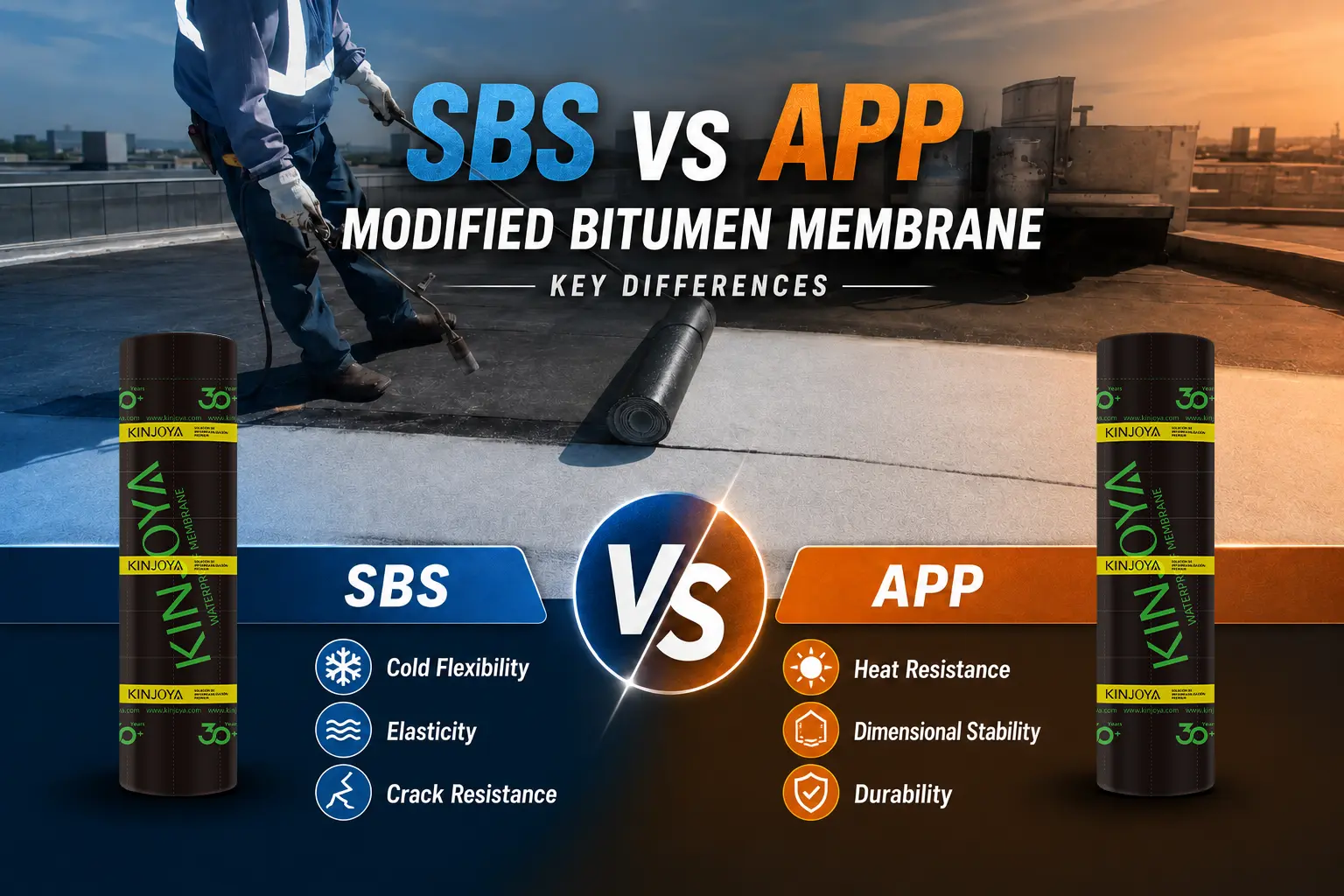
SBS modified bitumen membrane is generally better for cold climates, roof movement, low-temperature flexibility, and projects that require stronger elasticity. APP modified bitumen membrane is usually better for hot climates, strong sunlight, higher heat resistance, and exposed roof applications where UV stability is important.
For buyers, contractors, and project owners, the real question is not simply whether SBS or APP is “better.” The better choice depends on climate, roof structure, application method, substrate condition, budget, maintenance expectations, and whether the waterproofing layer will be exposed or covered.
SBS vs APP Modified Bitumen Membrane: Quick Comparison
| Factor | SBS Modified Bitumen Membrane | APP Modified Bitumen Membrane |
|---|---|---|
| Main Modifier | Styrene-butadiene-styrene, giving the membrane rubber-like elasticity | Atactic polypropylene, giving the membrane plastic-like heat resistance |
| Best Climate | Cold, variable, or freeze-thaw climates | Hot, sunny, and high-UV climates |
| Flexibility | Excellent low-temperature flexibility | Good flexibility, but generally less elastic than SBS in cold conditions |
| Heat Resistance | Good, depending on formulation and reinforcement | Excellent, especially for exposed roofs in hot regions |
| UV Resistance | Usually needs mineral surface, coating, ballast, or protection when exposed | Often stronger UV resistance, especially in exposed torch-on systems |
| Roof Movement | Better for expansion, contraction, vibration, and structural movement | Better for dimensional stability under heat and sunlight |
| Application Methods | Torch-applied, self-adhesive, hot asphalt, or cold-applied systems depending on product type | Commonly torch-applied, especially for exposed roof waterproofing |
| Typical Use | Basements, podiums, roofs, tunnels, foundations, cold-region flat roofs | Flat roofs, exposed roofs, industrial buildings, hot-region waterproofing projects |
| Best Value | When flexibility and crack-bridging ability are important | When heat resistance and UV exposure are the main concerns |
What Is SBS Modified Bitumen Membrane?
SBS modified bitumen membrane is a waterproofing membrane made by modifying asphalt with styrene-butadiene-styrene polymer. This gives the membrane rubber-like elasticity, better elongation, and improved flexibility under low-temperature conditions.
In real projects, SBS membrane is commonly used where the substrate may move, crack, expand, or contract. It is especially suitable for areas with temperature changes, freeze-thaw cycles, structural vibration, or complex building joints.
SBS membrane is commonly selected for:
Cold-region flat roofs
Concrete roof decks with movement risk
Basement waterproofing
Foundation waterproofing
Podium decks and plaza decks
Tunnels, bridges, and infrastructure waterproofing
Projects requiring better crack-bridging performance
The main advantage of SBS is flexibility. When the building structure moves or the temperature drops, SBS membrane can better accommodate movement without cracking prematurely. This makes it a strong choice for projects where long-term waterproofing depends on elasticity.
What Is APP Modified Bitumen Membrane?
APP modified bitumen membrane is made by modifying asphalt with atactic polypropylene. Compared with SBS, APP gives the membrane stronger heat resistance, better dimensional stability under high temperatures, and improved performance under sunlight exposure.
APP membrane is widely used in hot climates and exposed roof applications. It is often installed by torch application, forming a strong bond with the substrate and creating a durable waterproofing layer for flat roofs, industrial buildings, commercial roofs, and public facilities.
APP membrane is commonly selected for:
Hot-climate flat roofs
Exposed roof waterproofing systems
Industrial and commercial roofing projects
Buildings with strong sunlight exposure
Roofs requiring higher heat resistance
Projects where torch-applied installation is preferred
The main advantage of APP is heat and UV performance. In regions with high roof surface temperatures, strong sunlight, and long dry seasons, APP membrane often provides better long-term stability than standard bitumen materials.
SBS vs APP: Which One Performs Better in Cold Weather?
SBS modified bitumen membrane usually performs better in cold weather. Its rubber-like structure allows it to remain flexible at lower temperatures, making it less likely to crack when the roof deck contracts or when the substrate experiences freeze-thaw movement.
In cold climates, waterproofing failure often happens because the membrane becomes too rigid. When the substrate moves, a rigid membrane may crack, split, or lose adhesion at weak points. SBS is designed to reduce this risk by offering better elongation and recovery.
Choose SBS for cold-weather projects when:
The building is located in a cold or mountainous region
The roof experiences large day-night temperature changes
The substrate has visible cracks or movement risk
The project requires strong crack-bridging ability
The waterproofing layer will be installed on concrete, podium decks, or infrastructure structures
APP can still be used in some moderate climates, but for low-temperature flexibility, SBS is normally the safer technical choice.
SBS vs APP: Which One Performs Better in Hot Weather?
APP modified bitumen membrane usually performs better in hot weather because it has stronger resistance to high roof surface temperatures. In hot climates, roof membranes must resist softening, flow, deformation, and UV-related aging.
APP-modified asphalt has a more plastic-like performance profile. This helps the membrane maintain stability under heat and sunlight, especially when the waterproofing layer is exposed rather than covered by tiles, screed, ballast, or insulation layers.
Choose APP for hot-weather projects when:
The roof is exposed to strong sunlight for long periods
The project is located in a hot, dry, or tropical climate
The membrane will be used as an exposed roofing layer
High-temperature resistance is more important than low-temperature flexibility
The roof has relatively stable structural movement
For hot regions, APP can provide strong long-term value because it is less likely to soften or deform under high roof temperatures when properly selected and installed.
Which Membrane Has Better Flexibility and Crack Resistance?
SBS membrane usually has better flexibility and crack resistance. This is one of the main reasons contractors choose SBS for concrete roofs, basements, foundations, bridges, tunnels, and areas where substrate movement is expected.
Concrete structures naturally expand, contract, shrink, and develop small cracks over time. If the waterproofing membrane cannot accommodate these movements, water may enter through weak points. SBS membrane is better suited for these conditions because it can stretch and recover more effectively.
SBS is generally better when the project has:
Concrete shrinkage cracks
Expansion joints or movement joints
Thermal expansion and contraction
Structural vibration
Complex corners, upstands, drains, and penetrations
Risk of substrate movement after installation
APP membrane can provide good waterproofing performance, but it is not normally chosen primarily for elasticity. Its main strength is heat resistance and weather stability rather than movement accommodation.
Which Membrane Has Better UV and Heat Resistance?
APP membrane generally has better UV and heat resistance, especially in exposed roofing applications. This makes it a practical choice for buildings in hot climates where the waterproofing membrane is directly exposed to sunlight.
However, the final performance also depends on the surface finish. Mineral-surfaced membranes, aluminum foil surfaces, protective coatings, or other exposed-grade finishes can improve weather resistance for both SBS and APP systems.
For exposed roof systems, buyers should check:
Surface finish type, such as mineral granule, sand, PE film, or aluminum foil
Membrane thickness
Reinforcement type, such as polyester or fiberglass
UV resistance requirement
Roof slope and drainage condition
Expected maintenance frequency
If the roof will be exposed for many years, APP is often the more practical option in hot and sunny regions. If SBS is used in exposed conditions, it should be selected with the correct protective surface or coating system.
Application Method: Is SBS or APP Easier to Install?
The ease of installation depends on product type, project environment, installer experience, and site safety requirements. SBS membranes are available in several application formats, including torch-applied, self-adhesive, hot asphalt, and cold-applied systems. APP membranes are commonly supplied as torch-applied membranes, especially for roofing projects.
Torch-applied APP membrane can be efficient for large roof areas, but it requires trained workers, open-flame safety control, clean substrates, and proper lap welding. SBS self-adhesive membranes may be preferred where open flame is restricted, such as enclosed areas, sensitive facilities, or renovation projects with fire risk.
Installation decision factors include:
Whether open-flame application is allowed on site
Substrate type and surface condition
Ambient temperature during installation
Roof slope and drainage design
Project schedule and labor availability
Safety requirements from the building owner or contractor
Compatibility with primer, insulation, cover board, or protection layer
A high-quality membrane can still fail if installation is poor. Proper substrate preparation, primer application, lap width, heating control, rolling pressure, and detail treatment are essential for both SBS and APP systems.
Which One Is Better for Flat Roof Waterproofing?
Both SBS and APP modified bitumen membranes can be used for flat roof waterproofing, but the better choice depends on the roof environment. For flat roofs in cold or variable climates, SBS is often preferred. For flat roofs in hot and sunny climates, APP is often preferred.
Flat roofs have a higher waterproofing risk than sloped roofs because water drains more slowly. Even a small installation defect, lap weakness, or drainage problem can cause leakage. Therefore, membrane selection should be combined with good drainage design, correct detailing, and regular maintenance.
For flat roofs, SBS is often better when:
The roof deck has movement or cracking risk
The climate includes cold winters or freeze-thaw cycles
The project requires strong flexibility around details
The waterproofing layer will be covered by insulation, screed, or protection board
For flat roofs, APP is often better when:
The roof is exposed to strong heat and sunlight
The building is in a hot or tropical climate
The project requires an exposed torch-applied roofing membrane
Dimensional stability under high temperature is a major concern
For critical flat roof projects, a two-layer modified bitumen system may provide better security than a single-layer system, especially around drains, parapets, equipment bases, and construction joints.
Which One Is Better for Basement and Foundation Waterproofing?
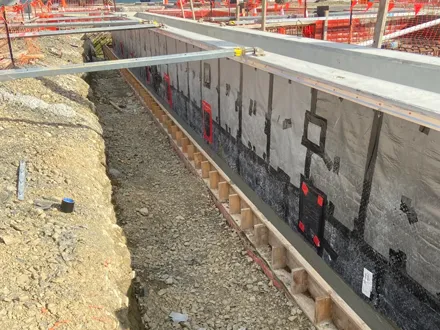
SBS modified bitumen membrane is usually the better choice for basements and foundations because these structures often face movement, settlement, concrete cracking, and water pressure. Flexibility and crack-bridging ability are more important here than UV resistance because the membrane is normally buried or covered after installation.
For underground structures, the waterproofing system must resist not only water penetration but also backfill damage, soil pressure, construction traffic, and long-term moisture exposure. SBS membrane can provide reliable performance when used with proper protection boards, drainage sheets, and detailing accessories.
For basement waterproofing, check these points before purchasing:
Positive-side or negative-side waterproofing requirement
Groundwater level and hydrostatic pressure
Concrete surface condition
Crack and construction joint treatment
Protection layer before backfilling
Drainage board or drainage pipe design
Compatibility with primer and sealant materials
APP can be used in certain below-grade applications, but SBS is often more suitable when the project requires flexibility and movement tolerance.
Which One Is More Cost-Effective?
The cost-effectiveness of SBS vs APP depends on the project conditions. SBS may provide better value where flexibility prevents future cracking and leakage. APP may provide better value where heat resistance and exposed roof durability reduce long-term maintenance risk.
Comparing only the material price can be misleading. A lower-cost membrane may become expensive if it does not match the climate, substrate, or application method. Waterproofing failure often creates costs far beyond the original membrane price, including repair labor, interior damage, production interruption, and replacement work.
When comparing total cost, consider:
Membrane thickness and reinforcement
Single-layer or double-layer system design
Primer, sealant, flashing, and accessory cost
Labor and installation method
Fire safety requirements for torch application
Protection layer or exposed surface requirement
Drainage improvement cost
Expected maintenance and repair cost
The most cost-effective membrane is the one that matches the project environment and reduces long-term leakage risk. For cold and moving structures, SBS is often the better investment. For hot exposed roofs, APP may offer better long-term value.
Common Mistakes When Choosing SBS or APP Membrane
1. Choosing APP only because the roof is exposed
APP is strong for exposed hot-climate roofs, but the roof still needs proper slope, drainage, seam treatment, and detail waterproofing. Exposure performance does not compensate for poor installation.
2. Choosing SBS without considering UV protection
SBS has excellent flexibility, but if it is used as an exposed roof layer, the correct surface protection is important. Mineral surface, aluminum foil, coating, or other protective finishes may be required.
3. Ignoring the substrate condition
Dust, moisture, cracks, oil, loose concrete, rust, and uneven surfaces can reduce adhesion. Substrate preparation is critical before applying any modified bitumen membrane.
4. Using the same membrane for every project
A basement, a factory roof, a shopping mall roof, and a bridge deck do not have the same waterproofing requirements. Membrane selection should be based on the actual project environment.
5. Underestimating lap and detail treatment
Many waterproofing failures happen at overlaps, corners, drains, penetrations, and vertical upstands. The membrane itself is only one part of the system; detail treatment determines real-world performance.
How to Choose Between SBS and APP Modified Bitumen Membrane
To choose correctly, start with the project environment. A membrane that performs well in one region or roof type may not be suitable for another. Climate, exposure, substrate movement, application method, and protection design should all be reviewed before purchasing.
Choose SBS modified bitumen membrane if:
The project is located in a cold or variable climate
The substrate may crack, move, expand, or contract
Low-temperature flexibility is important
The membrane will be used for basement, foundation, tunnel, bridge, or concrete roof waterproofing
The project needs stronger elongation and crack-bridging ability
Self-adhesive or cold-applied options are preferred due to fire restrictions
Choose APP modified bitumen membrane if:
The project is located in a hot or high-UV region
The roof membrane will be exposed to sunlight
High-temperature stability is more important than low-temperature flexibility
Torch-applied installation is acceptable and preferred
The roof has relatively stable structural movement
The project requires durable exposed roof waterproofing
For important projects, buyers should also confirm membrane thickness, reinforcement type, surface finish, installation method, roll size, packaging, storage requirements, and technical support before placing an order.
Recommended Selection by Project Type
| Project Type | Recommended Membrane | Reason |
|---|---|---|
| Cold-region flat roof | SBS | Better low-temperature flexibility and crack resistance |
| Hot-climate exposed roof | APP | Better heat resistance and UV stability |
| Basement waterproofing | SBS | Better movement tolerance and crack-bridging ability |
| Foundation waterproofing | SBS | More suitable for buried concrete structures and settlement movement |
| Industrial roof | SBS or APP | Choose based on climate, exposure, and roof movement |
| Commercial flat roof | SBS or APP | SBS for flexibility; APP for hot exposed conditions |
| Bridge or tunnel waterproofing | SBS | Better elasticity under vibration and movement |
| Exposed torch-on roofing | APP | Strong heat resistance and exposed weathering performance |
FAQ: SBS vs APP Modified Bitumen Membrane
Is SBS better than APP?
SBS is better when flexibility, low-temperature performance, and crack resistance are important. APP is better when heat resistance, UV exposure, and exposed roof durability are the main priorities.
Is APP membrane suitable for cold climates?
APP can be used in some moderate climates, but it is generally not the first choice for cold regions with strong freeze-thaw cycles. SBS usually performs better in low-temperature and movement-sensitive conditions.
Can SBS membrane be used on exposed roofs?
Yes, but the membrane should have a suitable protective surface, such as mineral granules, aluminum foil, or a compatible coating. Without protection, long-term UV exposure may reduce service life.
Can APP membrane be used for basement waterproofing?
APP can be used in some waterproofing applications, but SBS is often preferred for basements and foundations because underground structures require better flexibility and crack-bridging performance.
Which membrane is better for torch application?
Both SBS and APP membranes can be torch-applied depending on product design. APP is especially common in torch-on roofing systems, while SBS is available in torch-applied, self-adhesive, hot asphalt, and cold-applied options.
How many layers of modified bitumen membrane are needed?
Some projects use a single-layer system, while higher-risk roofs often use a two-layer system for better waterproofing security. The decision depends on roof risk, building value, climate, drainage, and specification requirements.
Final Recommendation: SBS or APP?
Choose SBS modified bitumen membrane if your project requires flexibility, low-temperature performance, movement tolerance, or crack-bridging ability. It is a strong choice for basements, foundations, tunnels, bridges, podium decks, and cold-region roofs.
Choose APP modified bitumen membrane if your project is located in a hot, sunny region and the waterproofing layer will be exposed to UV and high roof temperatures. It is a practical choice for exposed flat roofs, commercial buildings, industrial roofs, and torch-applied roofing systems.
For the best result, do not select the membrane by price alone. Review the climate, substrate, exposure condition, installation method, surface protection, drainage, and maintenance plan before making a purchasing decision.
Need Help Choosing the Right Modified Bitumen Membrane?
KINJOYA supplies waterproofing materials and roofing systems for commercial, industrial, residential, and infrastructure projects. Whether your project requires SBS modified bitumen membrane, APP modified bitumen membrane, self-adhesive waterproofing membrane, torch-applied membrane, or a complete flat roof waterproofing system, the right solution should be selected according to actual project conditions.
Contact KINJOYA with your project details, including climate, roof structure, substrate type, application method, exposure condition, and waterproofing requirements. Our team can help recommend a practical membrane system for long-term waterproofing performance.