

General Inquiries

Exterior Foundation Waterproofing

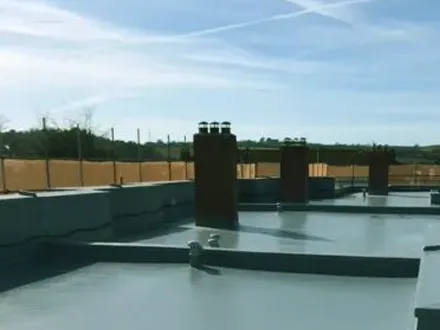
Exterior foundation walls are the outer walls of basements or semi-basements in contact with soil. They directly face groundwater pressure, capillary rise, and chemical erosion from soil substances like sulfates and chlorides. Hence, the waterproofing layer must have high strength, excellent impermeability, good corrosion resistance, and durability to block external moisture long-term. It must also seamlessly integrate with slab waterproofing to form a continuous system. Suitable for basement exterior walls in all building types, this waterproofing is the first line of defense ensuring dry underground space and preventing structural damage, critical for overall building safety.

EXTERIOR FOUNDATION WATERPROOFING PRODUCTS

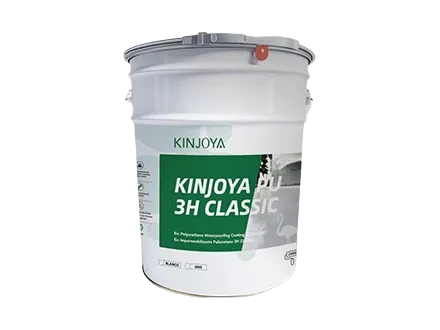
KINJOYA PU 3H CLASSIC
High solids, VOC-compliant, single-component, moisture-curing polyurethane membrane. Available in Flat substrate and Sagging Resistant viscosities for horizontal and vertical surfaces. Excellent tensile strength and elongation.
View Product

Special Requirements for Exterior Foundation Wall Waterproofing Materials

Impermeability and Water Pressure Resistance

Exterior foundation walls continuously bear hydrostatic pressure from groundwater, with pressure magnitude fluctuating with water level changes. Waterproofing materials must possess excellent impermeability, remaining watertight under sustained water pressure. Material density and thickness should sufficiently resist design water pressure, preventing pressurized water from penetrating through the material itself or along material-substrate interfaces.

Corrosion Resistance and Long-term Durability

Underground environments contain sulfates, chlorides, acids, alkalis, and microbial metabolites—chemical agents that can corrode waterproofing materials. Materials require good chemical stability, resisting degradation, swelling, or performance decline during prolonged contact with corrosive groundwater. Additionally, materials should withstand physical aging caused by freeze-thaw cycles and wet-dry alternation.

Impermeability and Water Pressure Resistance
Corrosion Resistance and Long-term Durability

Quality Control Essentials for Exterior Foundation Wall Waterproofing

Substrate Preparation and Condition Acceptance

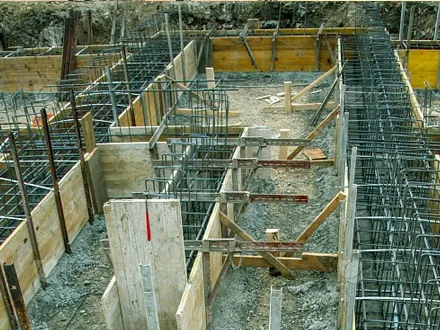
Prior to exterior foundation wall waterproofing construction, concrete surfaces must be firm and level, with thorough cleaning of dust, oil, and loose particles. Tie rod holes, honeycomb areas, and similar defects require repair to achieve smoothness. Internal and external corners should be formed into rounded arcs to facilitate dense membrane application. Substrate moisture content must comply with material requirements, with differentiated treatment for dry-cure or moisture-cure materials, and primer application when necessary to enhance adhesion.

Reinforcement Layer Installation and Finished Product Protection

At critical details such as internal and external corners, construction joints, and pipe penetrations, additional waterproofing reinforcement layers must be pre-installed with widths and thicknesses complying with design requirements. Main membrane application should proceed from bottom to top, with strict control of lap widths ensuring water-flow direction compliance. Upon completion, timely protection layer installation prevents mechanical damage during subsequent reinforcement tying, formwork installation, and backfilling operations.

Substrate Preparation and Condition Acceptance
Reinforcement Layer Installation and Finished Product Protection

Post-Waterproofing Protection and Backfill Protocol

Immediately after waterproofing acceptance, apply a protective layer using insulation boards, brick masonry, or cement mortar—ensuring full coverage and uniform thickness to buffer impact during backfill. Use fine-grained soil free of sharp rocks or concrete debris. Backfill in thin, laminated layers, compacting with light machinery while avoiding heavy rollers directly above waterproofed areas. Strictly control each layer thickness and meet design compaction requirements. Maintain symmetrical backfill on both sides to prevent unbalanced pressure and foundation displacement. Monitor protection layer continuously throughout the process and halt immediately to repair any observed damage.

Post-Waterproofing Protection and Backfill Protocol
Get in Touch with KINJOYA Now!
Address
KINJOYA Updates
News1
Apr 29, 2026
News2
Apr 29, 2026
News3
Apr 29, 2026
view more news
We use cookies on this site, including third party cookies, to delivery experiennce for you.
Accept Cookies
Read Privacy Policy