


General Inquiries

WATERPROOFING ADDITIVES

Additives in waterproofing construction materials enhance durability and impermeability across various applications. In concrete systems, specialized admixtures reduce porosity, control cracking, and improve water resistance. For membrane-based and coating products, liquid or powder additives modify rheology, adhesion, and elasticity, ensuring long-term barrier performance. These chemical solutions adapt to different substrates and environmental conditions, enabling reliable protection against moisture ingress while maintaining structural integrity. Such additives are essential for optimizing both hydraulic concrete and prefabricated waterproofing systems.

TYPES OF WATERPROOFING ADDICTIVES

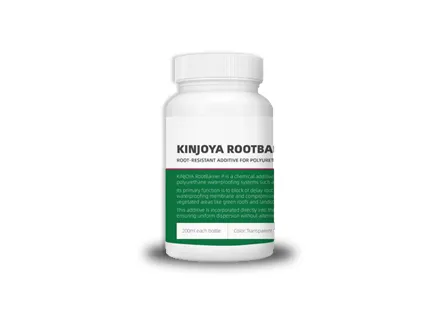
KINJOYA ROOTBARRIER P
KINJOYA RootBarrier P is a root-resistant additive for polyurethane waterproofing. It blocks root growth, preventing membrane penetration and maintaining integrity in green roofs. Incorporated during application, ensuring uniformity.
View Product

Why Choose Waterproofing Additives as Performance Enhancers for Construction Projects?

Waterproofing additives are functional materials incorporated into cement mortar, concrete or waterproof coatings to enhance their performance, significantly improving building impermeability and waterproofing capability. Through physical or chemical action, additives fill capillary pores, create hydrophobic effects or increase material density, giving ordinary cement-based materials excellent waterproofing properties. From underground works to green roofs, from rigid waterproofing layers to repair mortars, additives provide flexible and efficient waterproofing solutions for various projects. They are essential technical means for achieving structural self-waterproofing and enhancing durability in modern construction.

Enhancing Inherent Waterproofing of Cement-Based Materials

Ordinary cement mortar and concrete contain numerous capillary pores that serve as pathways for water penetration. Waterproofing additives address this through two mechanisms: hydrophobic additives form water-repellent layers on pore walls, preventing water from wetting the surface; micro-filling additives use ultrafine particles to block capillaries and increase material density. These actions together enhance the inherent impermeability of cement-based materials, enabling them to resist water pressure without leaking. This structural self-waterproofing approach offers the advantage of matching building service life, avoiding later replacement or maintenance, making it ideal for basements and tanks where repairs are difficult.

Meeting Functional Requirements of Special Projects

Modern construction projects are increasingly diverse, demanding various special properties from waterproofing materials. Root-resistant additives inhibit plant root growth direction, preventing root penetration—essential components for green roofs. Fiber-reinforced additives form three-dimensional networks within materials, significantly improving crack and impact resistance for mass concrete and irregular areas. Accelerating additives for damp surfaces enable normal curing underwater or in high-humidity environments. These functional additives extend the application range of ordinary waterproofing materials to meet specialized requirements of green roofs, subway tunnels and hydraulic engineering projects.

Enhancing Inherent Waterproofing of Cement-Based Materials
Meeting Functional Requirements of Special Projects

Waterproofing Additives for Varied Applications

Waterproofing additives are tailored for specific conditions. Crystalline additives react with water to form insoluble crystals, blocking pores permanently—ideal for below-grade structures under constant pressure. Water-repellent additives, often fatty acids or silicones, line pores with hydrophobic layers that block moisture but allow vapor transmission, perfect for above-grade façades. Powdered polymers enhance flexibility and adhesion in mortars, improving durability on moving substrates or in freeze-thaw environments. Setting time modifiers—accelerators for cold weather and retarders for hot climates—ensure proper curing. Integral admixtures provide uniform, long-lasting protection throughout concrete, avoiding membrane vulnerabilities. Selecting the right type based on exposure and substrate ensures optimal, durable waterproofing.


Waterproofing Additives for Varied Applications

Key Installation Considerations for waterproofing additives

Successful use of waterproofing additives demands precision. Dosage must be exact—too little undermines performance, while excess harms strength or workability. Always follow manufacturer guidelines and trial first. Ensure thorough mixing for uniform distribution; prevent clumping with powders. Verify compatibility with cement, aggregates, and other admixtures to avoid adverse reactions. Application timing and sequence are critical, especially during batching. For surface treatments, proper substrate preparation and moisture levels are essential. Proper curing remains vital to maximize benefits. Finally, conduct quality control tests, like water penetration trials, to confirm performance before full application.

Key Installation Considerations for waterproofing additives
Get in Touch with KINJOYA Now!
Address
KINJOYA Updates
News1
Apr 29, 2026
News2
Apr 29, 2026
News3
Apr 29, 2026
view more news
We use cookies on this site, including third party cookies, to delivery experiennce for you.
Accept Cookies
Read Privacy Policy