TYPE | Cultural & Educational Facilities | LOCATION | Beijing |
MATERIAL | KINJOYA FM PLAIN, KINJOYA FM VERDASYS | YEAR | 2020 |
AREA | 78000㎡ |
Background
As a key educational livelihood project, this project demanded high standards of building safety and durability. The waterproofing work was critical for the usability and lifespan of the underground spaces. The school buildings are densely populated, with basements containing equipment rooms and storage areas. Waterproofing failure would disrupt the educational environment and compromise facility safety. Concrete substrates often have issues like laitance, oil contamination, and unevenness, affecting the adhesion of waterproofing layers. Improper treatment could lead to blistering, leaks, and other quality problems.
Solution
The basement roof of this project innovatively utilized shot-blasting technology for substrate preparation, combined with the KINJOYA FM PLAIN SBS waterproofing membrane and KINJOYA FM VERDASYS root-resistant waterproofing membrane, significantly enhancing the roof’s waterproofing performance. Shot-blasting involves propelling steel shot at high speed onto the concrete surface, effectively removing laitance, oil, old coatings, and loose material. This creates a uniformly rough texture, significantly increasing the contact area and mechanical interlock for the waterproofing layers, providing a solid foundation for membrane installation. The KINJOYA FM PLAIN SBS membrane serves as the primary barrier, with SBS-modified asphalt offering excellent elasticity and low-temperature flexibility to accommodate minor substrate movements. The KINJOYA FM VERDASYS root-resistant membrane acts as a critical secondary layer. Specifically designed to address potential root penetration from campus green spaces, its unique chemical root inhibitor combined with a physical barrier effectively prevents plant roots from damaging the waterproofing system while maintaining excellent waterproofing properties and durability. The combination of these two membranes creates a complementary “rigid-flexible” waterproofing system.
Outcomes
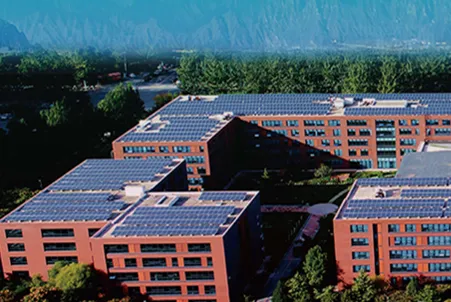
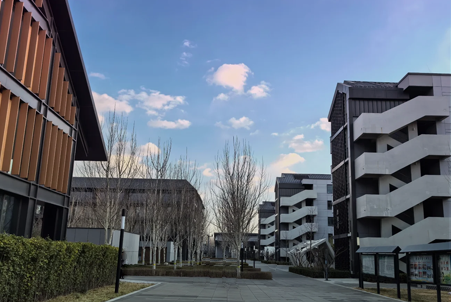
The Daxing No.1 Middle School waterproofing project demonstrates a shift from single-material reliance to a systematic approach integrating process innovation and material upgrades. The application of shot-blasting technology improved substrate preparation quality, laying the foundation for the long-term performance of the waterproofing layers. The double-layer SBS membrane design with root resistance is suitable for complex scenarios such as school building basements and green roofs, ensuring campus building safety and occupant comfort.